
Table of Contents
- 1. Risk Level
- 2. Time Commitment
- 3. Knowledge Requirement
- 4. Cost & Charges
- 5. Profit Potential
- Step 1: Start with Long-Term Investing
- Step 2: Use SIP
- Step 3: Learn Before Trading
- Step 4: Try Intraday Later
- For Long-Term Investing:
- For Intraday Trading:
- Beginner Choice:
- Smart Strategy:
- 1. Starting with Intraday
- 2. Expecting Quick Money
- 3. Ignoring Charges
- 4. Following Tips Blindly
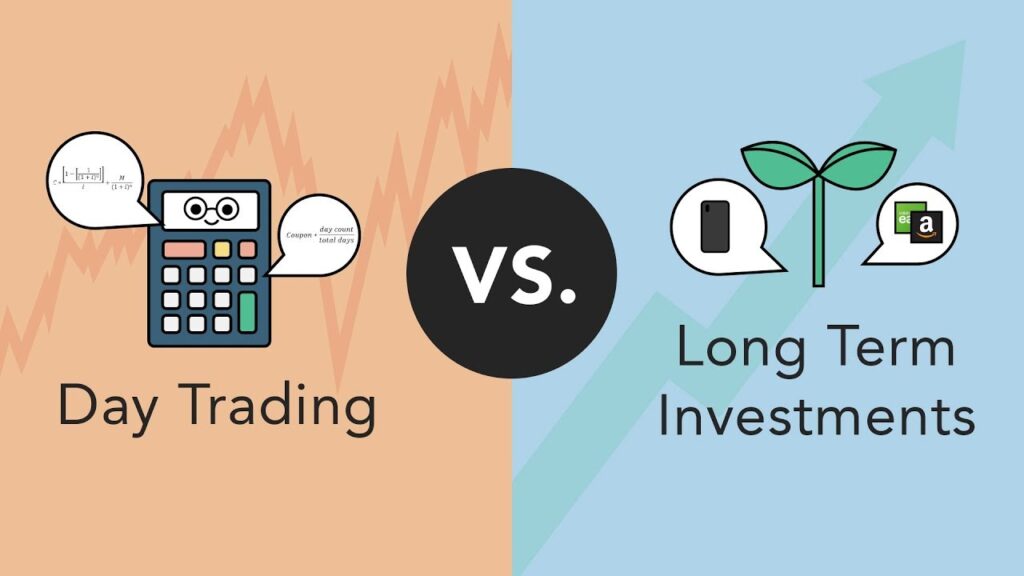
Introduction
If you are entering the stock market for the first time, one of the biggest questions you will face is:
👉 Should I do intraday trading or long-term investing?
Both methods can help you make money, but they are completely different in terms of risk, effort, and strategy.
Many beginners are attracted to intraday trading because of quick profits. But in reality, long-term investing is what builds real wealth.
Before you decide, it’s important to understand both properly.
If you’re just starting out, first read:
👉 What is a Demat Account? (Beginner Guide)
👉 How to Start Investing with ₹1000
In this guide, we will compare intraday trading vs long-term investing in detail and help you decide what’s best for you.
What is Intraday Trading?
Intraday trading means buying and selling stocks within the same day.
👉 You don’t hold stocks overnight
👉 Positions are closed before market ends
Key Features:
- Short-term trading
- High risk
- Requires constant monitoring
- Depends on market timing
If you want to explore brokers for this, read:
👉 Best Demat Account for Intraday Trading in India (2026 Guide)
What is Long-Term Investing?
Long-term investing means buying stocks and holding them for months or years.
👉 Focus on wealth creation
👉 Benefit from compounding
Key Features:
- Low stress
- Lower risk
- Based on fundamentals
- Suitable for beginners
You can also start with SIP:
👉 What is SIP in Mutual Funds (Beginner Guide)
👉 SIP vs Lumpsum Investment – Which is Better?
Intraday Trading vs Long-Term Investing (Quick Comparison)
| Feature | Intraday Trading | Long-Term Investing |
|---|---|---|
| Time | Same day | Years |
| Risk | High | Moderate/Low |
| Skill Required | High | Medium |
| Stress Level | High | Low |
| Profit Type | Quick | Gradual |
| Best For | Traders | Beginners |
Key Differences Explained
1. Risk Level
Intraday trading is highly risky because:
- Market moves quickly
- Small mistakes = big losses
Long-term investing:
- Allows recovery
- Based on company growth
👉 Beginners should avoid high risk initially.
2. Time Commitment
Intraday trading requires:
- Constant monitoring
- Full attention
Long-term investing:
- Requires minimal time
3. Knowledge Requirement
Intraday trading needs:
- Technical analysis
- Market timing
Long-term investing needs:
- Basic understanding
- Patience
4. Cost & Charges
Intraday traders pay:
- Brokerage frequently
- Taxes on every trade
👉 Read:
Long-term investors:
- Pay fewer charges
5. Profit Potential
Intraday:
- Quick profits possible
- But inconsistent
Long-term:
- Slow but steady growth
Which is Better for Beginners?
👉 Clear answer:
🚀 Long-Term Investing is Better for Beginners
Why?
- Lower risk
- Easier to learn
- Less stress
- Better long-term results
When Should You Consider Intraday Trading?
Only if:
- You understand market basics
- You can handle risk
- You have time to monitor
Best Strategy for Beginners
Step 1: Start with Long-Term Investing
- Invest small amounts
- Learn gradually
Step 2: Use SIP
👉 Regular investing builds discipline
Step 3: Learn Before Trading
- Study charts
- Practice
Step 4: Try Intraday Later
👉 Start with small capital
Best Demat Account Based on Your Strategy
For Long-Term Investing:
👉 Groww / Zerodha
Read:
For Intraday Trading:
👉 Upstox / Zerodha
Read:
Beginner Choice:
👉 Groww
Read:
Can You Do Both?
Yes.
Many investors use:
👉 Long-term investing + occasional trading
Smart Strategy:
- 80% → Long-term
- 20% → Trading
Common Mistakes Beginners Make
1. Starting with Intraday
👉 Biggest mistake
2. Expecting Quick Money
Stock market rewards patience
3. Ignoring Charges
👉 Read:
Demat Account Charges Guide
4. Following Tips Blindly
Always research
Real Example (Important)
Let’s compare:
Intraday Trader:
- Makes ₹500/day
- But loses ₹700 next day
👉 Net = loss
Long-Term Investor:
- Invests ₹1000/month
- Compounds over years
👉 Wealth grows steadily
Psychological Difference
Intraday:
- Stress
- Emotional decisions
Long-term:
- Peace of mind
- Rational decisions
Safety & Security
Your shares are stored with:
👉 NSDL or CDSL
Read:
Final Verdict
Intraday trading and long-term investing are completely different approaches.
👉 Intraday = Fast + risky
👉 Long-term = Slow + stable
🎯 Final Answer:
👉 If you are a beginner → Choose long-term investing
👉 Once experienced → Explore trading
FAQs
Which is better intraday or long-term?
Long-term investing is better for beginners.
Can beginners do intraday trading?
Yes, but it is risky.
Is intraday profitable?
It can be, but requires skill.
How to start investing?
Start with SIP and small investments.
