
Table of Contents
- ⚠️ You Can Borrow Money Without Selling Your Shares—But One Mistake Can Cost You Big
- What is Pledge in Demat Account?
- What is Unpledge of Shares?
- Why Do Investors Pledge Shares? (Real Use Cases)
- How Pledge of Shares Works (Step-by-Step Process)
- What Happens After You Pledge?
- How to Unpledge Shares (Step-by-Step)
- Step-by-Step Unpledge Process
- Charges for Pledge & Unpledge
- Which Brokers Offer Best Pledge Facility?
- Pledge vs Sell Shares
- Benefits of Pledging Shares
- Risks of Pledging Shares (Read This Twice)
- Common Mistakes Beginners Make While Pledging Shares
- Who Should Pledge Shares?
- Pledge vs Loan vs Selling
- Final Verdict: Should You Pledge Shares in 2026?
- FAQs

⚠️ You Can Borrow Money Without Selling Your Shares—But One Mistake Can Cost You Big
If you’ve ever needed urgent money while your stocks are sitting in your demat account, you’ve probably faced this dilemma:
- “Should I sell my shares?”
- “What if the market goes up after I sell?”
This is where most investors make a costly mistake.
They sell good stocks…
Only to watch them rise later.
But here’s something most beginners don’t know:
👉 You can use your shares to get money—without selling them
That’s called pledging shares in a demat account.
Sounds powerful, right?
It is.
But here’s the catch:
If you don’t understand how pledge works, you could face forced selling, margin calls, or unexpected losses
And that’s exactly why you need this guide.
Based on latest 2026 broker practices in India, we’ll break down:
- What pledge and unpledge actually mean
- How the process works step-by-step
- Charges, risks, and real examples
- Whether YOU should use it or avoid it
What is Pledge in Demat Account?
Let’s simplify this completely.
👉 Pledging shares means using your shares as collateral to get a loan or trading margin.
Real-Life Example
Think of it like a gold loan.
- You don’t sell your gold
- You keep it as security
- Bank gives you money
Same with shares:
- You don’t sell your stocks
- You pledge them
- Broker gives you margin or loan
How it works in the background
Your shares are held with:
- NSDL
- CDSL
When you pledge:
- Shares remain in your demat account
- But are marked as “pledged”
- You cannot freely sell them
Important Beginner Confusion
👉 “Do I lose ownership of shares?”
❌ No
You still own them
👉 “Can I still get dividends?”
✔ Yes (in most cases)
👉 “Can I sell pledged shares?”
❌ Not directly—you must unpledge first
What is Unpledge of Shares?
Now let’s reverse it.
👉 Unpledging means releasing your shares from collateral
When does unpledge happen?
Simple Flow:
- Pledge → Get money
- Use money
- Repay → Unpledge → Shares free again
Timeline Insight
- Pledge → Same day / next day
- Unpledge → 1–2 working days
Why Do Investors Pledge Shares? (Real Use Cases)
Let’s get practical.
Why would someone do this instead of selling?
1. To Get Trading Margin
Active traders use pledge to:
- Take larger positions
- Trade futures & options
Example:
- ₹1 lakh shares → ₹70,000 margin
2. Avoid Selling Long-Term Investments
You believe in a stock long-term but need money.
Instead of selling:
👉 You pledge
3. Short-Term Cash Needs
Example:
- Medical emergency
- Business cash flow
- Personal expense
4. IPO Funding / Opportunity Use
Some investors:
- Pledge shares
- Use funds for IPO or short-term trades
👉 If you’re new to investing, first understand basics:
How Pledge of Shares Works (Step-by-Step Process)
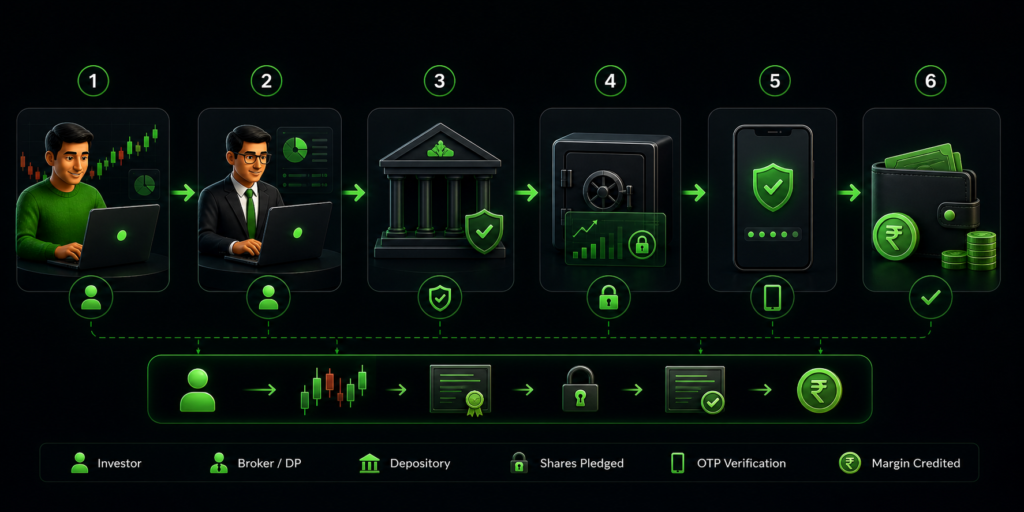
Now let’s go step-by-step like you’re actually doing it.
Step 1: Select Shares to Pledge
Not all shares are eligible.
Typically:
- Large-cap stocks
- High liquidity stocks
Step 2: Place Pledge Request via Broker
Using apps like:
- Zerodha
- Angel One
You select:
- Stock
- Quantity
Step 3: OTP Authorization (Very Important)
You will receive OTP/email link from depository.
👉 This step ensures:
- You are authorizing pledge
- No misuse happens
Step 4: Shares Get Marked as Pledged
After approval:
- Shares stay in your demat
- Status changes to pledged
Step 5: Margin / Loan is Credited
You receive:
- Trading margin OR
- Loan amount
Real Example
- Shares worth: ₹1,00,000
- Haircut: 30%
- Usable margin: ₹70,000
What is Haircut?
👉 Portion of value NOT given as loan
- Safer for broker
- Protects against market fall
Beginner Confusion
👉 “Why don’t I get full value?”
Because:
- Market can fall
- Broker needs safety margin
What Happens After You Pledge?
This is where risk begins.
If market stays stable:
✔ No issue
If market falls:
👉 Margin shortfall happens
Broker may:
- Ask you to add funds
- OR sell shares (forced selling)
👉 This is why understanding risk is critical (covered in next section)
How to Unpledge Shares (Step-by-Step)
Pledging is easy.
Unpledging is where many beginners get confused.
Let’s simplify it.
What does “Unpledge” actually mean?
👉 You’re removing the collateral tag from your shares.
After unpledge:
- Shares become free again
- You can sell or transfer them
Step-by-Step Unpledge Process
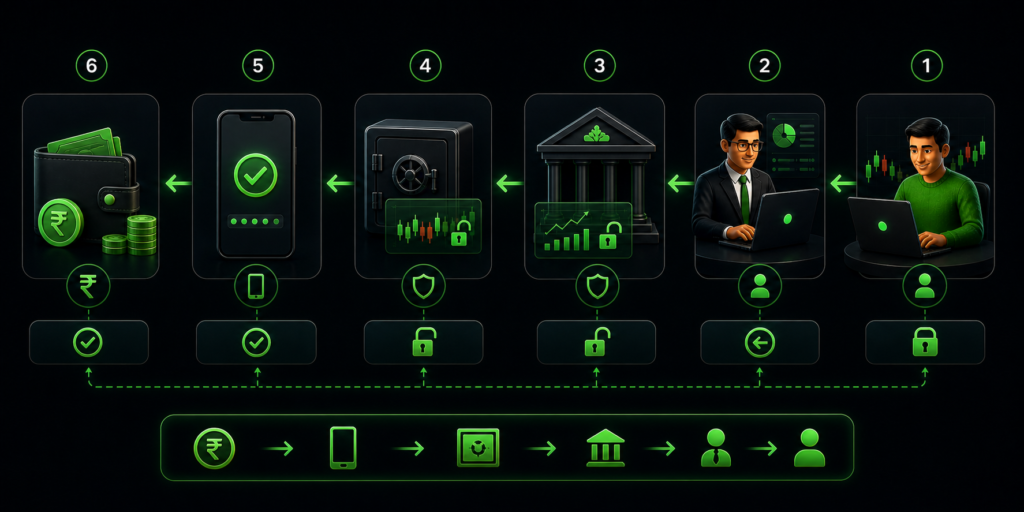
Step 1: Repay Loan / Close Margin
Before unpledging, you must:
- Repay borrowed amount OR
- Close your margin positions
👉 If you don’t:
❌ Unpledge will fail
Step 2: Place Unpledge Request
Through your broker:
- Zerodha
- Angel One
- Upstox
Select:
- Stock
- Quantity to unpledge
Step 3: Confirm via OTP / Authorization
Just like pledge:
- You’ll receive OTP/email link
- Confirm request
Step 4: Shares Get Released
- Status changes from pledged → free
- Usually within 1–2 working days
Important Beginner Confusion
👉 “Can I partially unpledge shares?”
✔ Yes
You can unpledge any portion (if margin allows)
Charges for Pledge & Unpledge
Let’s talk real costs.
Charges Table:
| Type | Charges |
|---|---|
| Pledge Charges | ₹30–₹50 per request |
| Unpledge Charges | ₹20–₹50 |
| Interest (if loan) | 8%–18% annually |
👉 Based on latest 2026 charges across brokers
Hidden Cost Most People Ignore
👉 Interest on borrowed amount
Example:
- You borrow ₹50,000
- Interest = 12%
That’s:
👉 ₹6,000/year
👉 Always factor this before pledging
Also read:
Which Brokers Offer Best Pledge Facility?
Not all brokers are equal.
Comparison Table:
| Broker | Charges | Ease of Use | Best For |
|---|---|---|---|
| Zerodha | Low | Medium | Cost-focused users |
| Angel One | Medium | Easy | Beginners |
| Upstox | Low | Easy | Active traders |
👉 Before choosing, compare:
Pledge vs Sell Shares
This is where real decision-making happens.
Comparison Table:
| Feature | Pledge Shares | Sell Shares |
|---|---|---|
| Ownership | Retained | Lost |
| Cash Access | Yes | Yes |
| Future Gains | Yes | No |
| Risk | Medium | Low |
| Interest Cost | Yes | No |
Real-Life Scenario
You own:
- ₹1 lakh worth stocks
Need ₹50,000.
Option 1: Sell Shares
- Immediate cash
- Lose future upside
Option 2: Pledge Shares
- Get money
- Keep shares
- Pay interest
👉 So what’s better?
Depends on:
- Market outlook
- Your risk tolerance
Benefits of Pledging Shares
Let’s be fair—there are real advantages.
1. Liquidity Without Selling
You don’t disturb your portfolio.
2. Continue Long-Term Investing
You stay invested while accessing funds.
3. Leverage Opportunities
Useful for:
- Traders
- Experienced investors
4. Faster Than Loans
No paperwork like bank loans.
Risks of Pledging Shares (Read This Twice)

This is where beginners lose money.
1. Market Fall = Margin Call
If stock price drops:
👉 Your collateral value falls
Broker may:
- Ask for more funds
- Or sell your shares
2. Forced Selling
Worst-case scenario:
👉 Broker sells your shares automatically
3. Interest Cost
Even if market doesn’t move:
👉 You still pay interest
4. Over-Leverage Trap
Many beginners:
- Borrow too much
- Take big trades
- Lose capital
5. Volatile Stocks Risk
If you pledge risky stocks:
👉 Higher chance of margin calls
🚨 Reality Check
Pledging is powerful—but dangerous if misused
Common Mistakes Beginners Make While Pledging Shares
This is where most people don’t just make mistakes…
👉 they lose money.
Let’s go through the real ones (based on actual investor behavior in India).
❌ 1. Over-Leveraging (Biggest Wealth Destroyer)
You pledge ₹1 lakh worth shares
→ Get ₹70,000 margin
→ Trade ₹2–3 lakh positions
Market moves against you → loss amplified
👉 This is how small losses turn into big damage
❌ 2. Ignoring Margin Calls
When market falls:
- Broker sends margin call
- You ignore it
👉 Result: Forced selling
❌ 3. Pledging Volatile Stocks
Small-cap or high-risk stocks:
- High fluctuation
- High haircut
👉 Leads to frequent margin issues
❌ 4. Not Understanding Interest Cost
Many think:
👉 “I’m just using my own shares”
Reality:
👉 You’re borrowing money → interest applies
❌ 5. Thinking It’s “Free Money”
This mindset is dangerous.
Pledge is:
❌ Not free
❌ Not risk-free
⚠️ Smart Investor Rule
Use pledge for strategy—not desperation
Who Should Pledge Shares?
Let’s remove confusion once and for all.
✅ You SHOULD consider pledging if:
- You understand market risk
- You are an active trader
- You need short-term liquidity
- You can handle margin calls
❌ You should AVOID pledging if:
- You are a beginner
- You don’t understand leverage
- You panic in market dips
- You’re investing for long-term wealth
Real Talk
If you’re investing for:
- SIP
- Long-term wealth
- Stability
👉 You probably don’t need pledge at all
👉 Focus instead on:
Pledge vs Loan vs Selling
Let’s go one level deeper.
| Option | Best For | Risk | Cost |
|---|---|---|---|
| Pledge Shares | Short-term funds | Medium | Interest |
| Sell Shares | Exit investment | Low | Opportunity loss |
| Personal Loan | Large amount | Medium | High interest |
Insight:
- Need short-term funds → Pledge
- Want to exit → Sell
- Need big capital → Loan
Final Verdict: Should You Pledge Shares in 2026?
Let’s be brutally honest.
👉 For 70–80% investors → NO
👉 For experienced users → YES (with control)
Clear Recommendation:
- Beginner → Avoid
- Trader → Use carefully
- Investor → Use only if necessary
Best Broker Recommendation:
- Lowest cost → Zerodha
- Beginner-friendly → Angel One
- Active trading → Upstox
👉 To choose better, read:
FAQs
What is pledge in demat account?
Pledging shares means using your stocks as collateral to get a loan or trading margin without selling them.
Is pledging shares safe?
Yes, but it carries risks like margin calls and forced selling if the market falls.
Can I sell pledged shares?
No. You must first unpledge them before selling.
What happens if I don’t repay?
Your broker can sell your pledged shares to recover the money.
How long does unpledge take?
Usually 1–2 working days after request.
