
Table of Contents
- Step 1 — Open a Demat Account
- Step 2 — Fill DRF (Dematerialization Request Form)
- Step 3 — Submit to Depository Participant (DP)
- Step 4 — Verification Process
- Step 5 — Shares Get Converted
- ✔ Names Must Match
- ✔ Joint Holding Rules
- ✔ Company Must Be Active
- ❌ Signature Mismatch
- ❌ Name Mismatch
- ❌ Lost Certificates
- ❌ Delaying Conversion
- ❌ Wrong Details in DRF
- ❌ Choosing Wrong Broker
- Can I sell physical shares directly?
- How long does conversion take?
- Is dematerialization free?
- What if I lost my share certificate?
- Is demat mandatory in India?
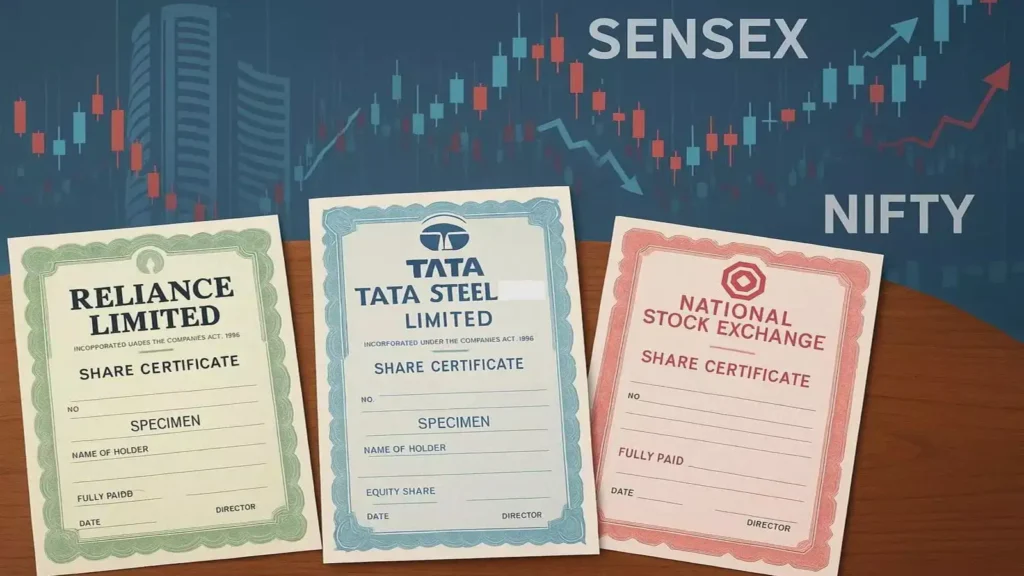
Many investors in India still hold old physical share certificates.
But here’s the important update:
👉 Physical shares are no longer valid for trading.
👉 You must convert them into demat form to sell or transfer them.
So the question is:
👉 How do you convert physical shares into a demat account?
In this complete beginner-friendly guide, you will learn everything step-by-step.
✅ Quick Answer
👉 You can convert physical shares into demat form through a process called:
👉 Dematerialization
Steps:
- Open a demat account
- Submit DRF form
- Attach share certificates
- Shares get converted
👉 If you don’t have an account yet:
Best Demat Account for Beginners in India
📊 What is Dematerialization?
Dematerialization means:
👉 Converting physical share certificates into electronic format.
Once converted:
- Shares are stored digitally
- Easy to sell
- Safe from loss/damage
👉 Learn basics first:
What is a Demat Account (Complete Guide)
⚠️ Why You Must Convert Physical Shares
SEBI rules have made it mandatory.
👉 You cannot:
- Sell physical shares
- Transfer physical shares
👉 Everything must be in demat form.
👉 Related:
Is It Safe to Open a Demat Account Online in India?
📋 Documents Required
To convert physical shares:
You need:
- Physical share certificates
- PAN card
- Aadhaar card
- Demat account details
👉 Full document list:
Documents Required for Demat Account in India (2026)
🔄 Step-by-Step Process to Convert Physical Shares to Demat
Let’s break it down simply.
Step 1 — Open a Demat Account
If you don’t already have one:
👉 Open with a reliable broker.
Popular options:
- Zerodha
- Groww
- Upstox
👉 Compare here:
Zerodha vs Groww for Beginners
👉 Or detailed comparison:
Best Discount Broker in India (Zerodha vs Groww vs Upstox vs Angel One)
Step 2 — Fill DRF (Dematerialization Request Form)
You need to:
- Fill DRF form
- Mention certificate details
- Sign properly
Step 3 — Submit to Depository Participant (DP)
Submit:
- DRF form
- Physical certificates
To your broker (DP).
👉 Understand DP:
What is a Depository Participant (DP) in Demat Account?
Step 4 — Verification Process
The DP verifies:
- Signature
- Certificate authenticity
Then sends request to company registrar.
Step 5 — Shares Get Converted
Timeline:
👉 15–30 days
After that:
👉 Shares appear in your demat account.
👉 If shares don’t appear:
How to Track All Your Demat Accounts in One Place
📊 Charges for Dematerialization
Charges vary by broker.
Typical cost:
- ₹100 – ₹500 per request
Some brokers offer:
👉 Free dematerialization
👉 Check all charges:
Demat Account Charges in India (2026 Guide)
⚠️ Important Rules You Must Know
✔ Names Must Match
Name on:
- Share certificate
- Demat account
👉 Must be identical
✔ Joint Holding Rules
If shares are joint:
👉 All holders must sign
👉 Related:
Can a Joint Demat Account Be Converted to Single?
✔ Company Must Be Active
Shares must belong to:
👉 Listed or valid company
📉 What If Shares Are Very Old?
Many people hold shares from:
- 1990s
- Early 2000s
👉 Still valid if company exists
But:
👉 You may need extra verification
🔄 Can You Sell After Conversion?
Yes.
Once shares are in demat:
👉 You can sell anytime
👉 Learn selling process:
How to Start Investing in Stock Market with ₹1000
⚠️ Common Problems & Solutions
❌ Signature Mismatch
Solution:
👉 Update signature with broker
❌ Name Mismatch
Solution:
👉 Submit correction documents
❌ Lost Certificates
Solution:
👉 Apply for duplicate certificates
💡 Real Example
Let’s say:
- You have ₹50,000 worth old shares
- Still in paper form
👉 You cannot sell them directly
But after dematerialization:
👉 You can sell instantly
📊 Physical vs Demat Shares
| Feature | Physical Shares | Demat Shares |
|---|---|---|
| Format | Paper | Digital |
| Risk | High | Low |
| Transfer | Slow | Instant |
| Safety | Low | High |
👉 Learn more:
Demat vs Physical Shares (Complete Comparison)
🧠 Best Strategy (IMPORTANT)
If you still have physical shares:
👉 Convert them immediately
Because:
- Market rules changed
- Digital is mandatory
- Faster transactions
👉 Also check:
How Many Demat Accounts Can a Person Have in India?
🔄 Can You Transfer Shares After Conversion?
Yes.
Once converted:
👉 You can transfer easily
👉 Full guide:
Can You Transfer Shares From One Demat Account to Another?
👉 Or:
How to Transfer Shares Between Brokers
⚠️ Mistakes to Avoid
❌ Delaying Conversion
You may miss selling opportunities.
❌ Wrong Details in DRF
Always double-check.
❌ Choosing Wrong Broker
👉 Choose beginner-friendly broker
👉 Guide:
Best Demat Account for Small Investors in India (2026 Guide)
🏁 Final Verdict
👉 Converting physical shares into demat is mandatory and simple.
You just need to:
- Open demat account
- Submit DRF
- Wait for conversion
👉 Once done:
- Your shares become digital
- You can sell anytime
- No risk of loss
👉 If you are starting fresh:
How to Start Investing in Stock Market in India (Beginner Guide)
❓ FAQs
Can I sell physical shares directly?
No, they must be converted to demat first.
How long does conversion take?
Usually 15–30 days.
Is dematerialization free?
Depends on broker.
What if I lost my share certificate?
You need to apply for duplicate first.
Is demat mandatory in India?
Yes, for selling and transferring shares.
👉 Don’t miss:
Zerodha vs Groww for Beginners – Which is Better?
