
Table of Contents
- Why a Demat Account Cannot Be Transferred
- What Can Be Transferred Instead?
- What Happens After Death of Demat Account Holder?
- Transfer vs Transmission (Important Concept)
- How to Transfer Shares to Another Person
- Step-by-Step Process (Simple Explanation)
- Charges for Share Transfer
- Can You Change Ownership by Opening a New Account?
- Special Case: Joint Demat Accounts
- Common Mistakes to Avoid
- When Should You Transfer Shares?
- Final Verdict
- Conclusion
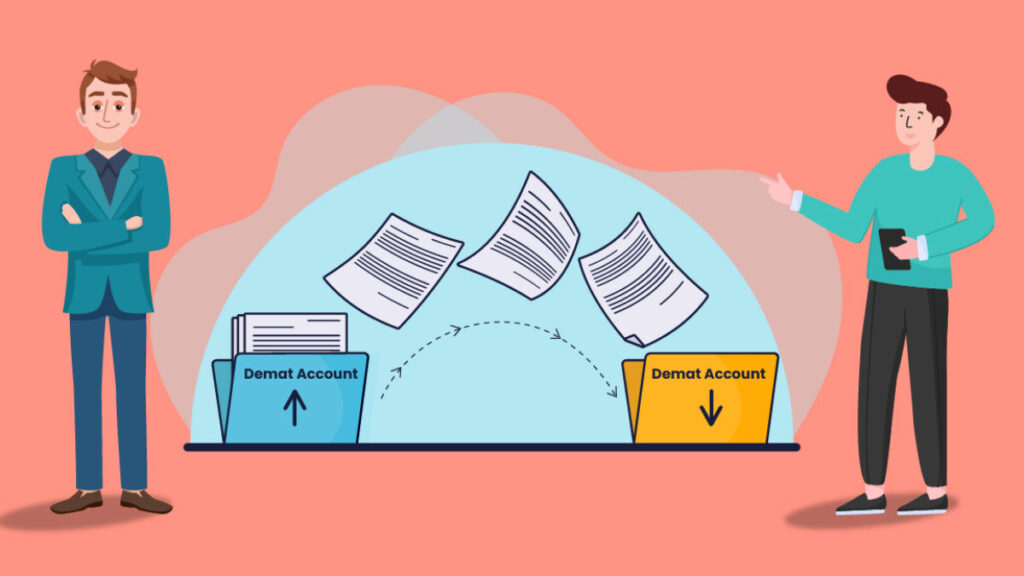
One of the most common questions beginners ask is: can a Demat account be transferred to another person?
This confusion usually comes up during situations like inheritance, gifting shares, or managing family investments. If you are new to investing and have just learned what is a demat account, it’s natural to assume that ownership can be transferred like other financial assets.
However, the reality is slightly different.
👉 A Demat account cannot be transferred to another person.
👉 But the shares inside it can be transferred.
Understanding this difference is extremely important, especially if you are planning long-term investing or building a family portfolio.
Why a Demat Account Cannot Be Transferred
A Demat account is not just a storage account—it is a legally verified financial identity.
It is linked with:
- PAN card
- Aadhaar
- Bank account
- KYC verification
This is why changing ownership is not allowed.
If ownership transfer were allowed, it could lead to fraud and regulatory issues. That’s why regulators like NSDL and CDSL strictly prevent this. You can understand this better in NSDL vs CDSL (Which Depository is Better?), where the role of depositories is explained in detail.
What Can Be Transferred Instead?
While the account itself cannot be transferred, you can still move your investments.
👉 You can transfer:
- Stocks
- Mutual funds
- Bonds
- ETFs
This is similar to how investors switch brokers after comparing platforms like Zerodha vs Groww for Beginners – Which Demat Account is Better in 2026? or Groww vs Upstox for Beginners (2026).
What Happens After Death of Demat Account Holder?
This is the most important scenario where people assume transfer is possible.
If Nominee is Added
If a nominee is registered (which is explained in Demat Account Nominee Rules in India (2026 Guide)):
- Shares are transferred to nominee
- Account is closed
- Process is smooth
The nominee must submit documents like:
- Death certificate
- Identity proof
- Transmission request
You can read the complete breakdown in What Happens to Shares After the Death of a Demat Account Holder?
If No Nominee is Added
This is where things get complicated.
- Legal heirs must submit court documents
- Process becomes time-consuming
- Delays in accessing investments
This is why adding a nominee is as important as understanding documents required for Demat account in India (2026).
Transfer vs Transmission (Important Concept)
Most beginners mix these two.
Transfer of Shares
- Voluntary
- Done during gifting or shifting
- Explained in How to Transfer Shares Between Brokers
Transmission of Shares
- Happens after death
- Legal process
- No DIS required
If you want a deeper understanding, check Can You Transfer Shares From One Demat Account to Another? (Step-by-Step Guide).
How to Transfer Shares to Another Person
Even though the account cannot be transferred, shares can.
Method 1: Off-Market Transfer
Used when:
- Gifting shares
- Family transfers
You need:
- DIS slip
- Receiver Demat ID
Method 2: Online Transfer (CDSL Easiest)
- Fast and paperless
- Ideal for modern investors
This is commonly used by users of platforms discussed in Best Discount Broker in India (Zerodha vs Groww vs Upstox vs Angel One).
Step-by-Step Process (Simple Explanation)
Let’s break it down in beginner-friendly steps:
Step 1: Get DIS Slip
Provided by your broker
Step 2: Fill Details
- ISIN
- Quantity
- Receiver ID
Step 3: Submit Request
Online or offline
Step 4: Transfer Completed
Usually within 1–3 days
Charges for Share Transfer
This is where many beginners make mistakes.
Typical charges include:
- ₹10–₹25 per ISIN
- DP charges
- Broker fees
You should always compare costs using:
- Groww Brokerage Charges Explained
- Zerodha Brokerage Charges Explained
- Upstox Brokerage Charges Explained
- Demat Account Charges in India (2026) – Full Cost Breakdown for Beginners
Also, don’t ignore hidden costs discussed in Hidden Charges in Demat Accounts Most Investors Ignore.
Can You Change Ownership by Opening a New Account?
Yes, but indirectly.
You can:
- Open new Demat account
- Transfer shares
- Close old account
This is similar to what many investors do after reading comparisons like:
- Zerodha vs 5Paisa
- Angel One vs Zerodha for Beginners in India (2026 Comparison)
- Groww vs Zerodha vs Upstox
Special Case: Joint Demat Accounts
In joint accounts:
- Ownership is shared
- Surviving holder retains access
But even here:
👉 The account itself is not “transferred”
To understand structure, read What Is a Joint Demat Account? (Complete Guide).
Common Mistakes to Avoid
1. Not Adding Nominee
Leads to legal trouble
2. Ignoring Charges
Reduces returns
3. Wrong Transfer Method
Always choose correct process
4. Lack of Planning
Use tools like:
- SIP Calculator
- CAGR Calculator
- Brokerage Calculator
Also, beginners should first understand how to start investing in stock market with ₹1000 before making such decisions.
When Should You Transfer Shares?
You should transfer shares when:
- Changing broker
- Gifting investments
- Portfolio restructuring
For example, if you find a better platform after reading Which Broker Has the Lowest Brokerage in India? (2026 Guide), transferring makes sense.
Final Verdict
So, can a Demat account be transferred to another person?
👉 No, it cannot be transferred.
👉 Yes, shares inside it can be transferred.
This is the most important takeaway.
Conclusion
Understanding whether a Demat account can be transferred to another person is crucial for every investor.
While the account itself remains fixed due to regulatory rules, the flexibility to transfer shares ensures smooth wealth management.
If you are serious about investing, also explore:
- Best Demat Account for Beginners in India (2026 Comparison)
- How to Open a Demat Account in India (2026) – Step-by-Step Guide
- Difference Between Demat Account and Trading Account (Beginner Guide)
These will help you build a strong foundation.
