Table of Contents
- Quick Summary
- What Happened?
- Why This Matters So Much
- Understanding UPI Credit in Simple Language
- Why Banks Are Interested
- Why Fintech Companies Are Excited
- Why Some Experts Are Worried
- Consumer Psychology Is Changing
- How This Could Affect Credit Cards
- Risks Users Should Understand
- Historical Context: India’s Digital Finance Evolution
- What Could Happen Next?
- Key Takeaways
- Final Verdict
- FAQs
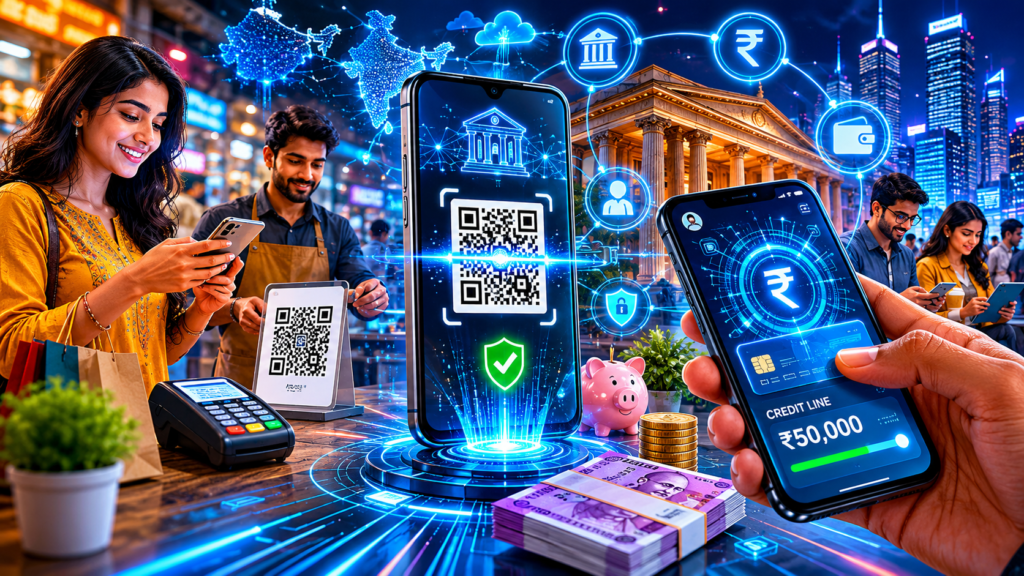
For millions of Indians, UPI has already replaced cash, wallets, and even debit cards.
Tea stalls, grocery shops, taxis, malls, pharmacies — almost every payment today feels incomplete without the familiar “scan and pay” sound.
But India’s digital payment revolution is now entering a completely new phase.
UPI is no longer just becoming a payment system. It is slowly becoming a borrowing ecosystem.
Banks and fintech companies are increasingly rolling out “credit line on UPI” features that allow users to access pre-approved credit directly through UPI apps.
And that is creating both excitement and concern across India’s financial ecosystem.
For some consumers, this feels like the future of convenience.
For others, it raises serious questions around overspending, debt habits, and financial discipline.
Quick Summary
| Key Topic | Details |
|---|---|
| Trend | UPI-linked credit lines |
| Ecosystem | Banks + fintech + NPCI |
| Main Benefit | Instant digital borrowing |
| Key Concern | Easy debt and overspending |
| User Interest | Rising rapidly |
| Industry Impact | Credit cards may face competition |
What Happened?
Indian banks and financial institutions are increasingly enabling credit lines through UPI platforms after regulatory support for the feature.
Instead of paying directly from savings accounts, eligible users can now access pre-approved borrowing limits linked to UPI apps.
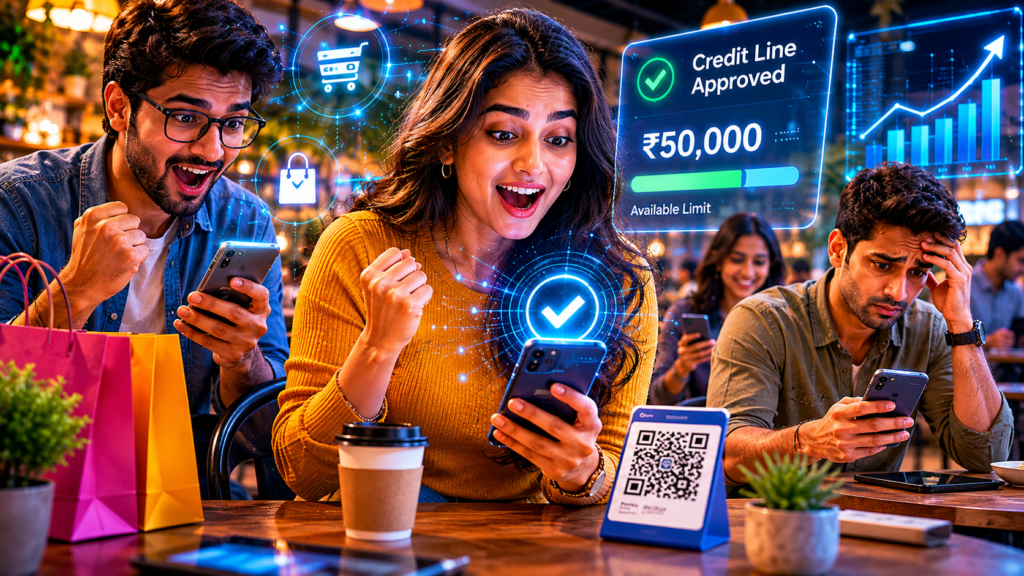
This means users may eventually:
- scan QR codes,
- make merchant payments,
- and repay later using bank-approved credit facilities.
The feature is gradually gaining traction because it combines:
- convenience,
- speed,
- and India’s already massive UPI ecosystem.
For fintech companies and banks, this opens a huge opportunity.
For consumers, it changes the psychology of spending.
Why This Matters So Much
India’s UPI ecosystem is enormous.
Digital payments have become deeply integrated into everyday life, especially among:
- young professionals,
- gig workers,
- urban consumers,
- and small businesses.
Until now, UPI mostly moved money people already had.
But adding credit changes everything.
Now users may spend money first and repay later — similar to:
- credit cards,
- BNPL systems,
- or overdraft facilities.
That is a major shift in consumer finance behavior.
Understanding UPI Credit in Simple Language
Think of UPI credit line as a pre-approved borrowing facility connected directly to your UPI app.
Normally:
- UPI payments come from bank balance.
With credit line:
- payments can come from a sanctioned borrowing limit instead.
Example:
Suppose your bank gives you a ₹50,000 UPI credit line.
You scan a merchant QR code and make a ₹3,000 payment.
Instead of deducting money from savings, the amount gets used from your approved credit limit.
You repay later based on bank terms.
Why Banks Are Interested
Banks see massive opportunity here.
India’s credit card penetration is still relatively low compared to developed markets.
But UPI adoption is huge.
That means banks can potentially:
- expand credit access,
- reach younger users,
- and increase digital borrowing activity without relying entirely on traditional cards.
This is especially attractive for:
- semi-urban users,
- first-time borrowers,
- and digitally active consumers.
Why Fintech Companies Are Excited
Fintech firms view this as the next big battleground in digital finance.
Companies in:
- payments,
- BNPL,
- and consumer lending
are closely watching how fast users adopt UPI-linked borrowing.
The reason is simple:
India’s payment behavior is already deeply conditioned around UPI convenience.
Adding credit directly inside that ecosystem reduces friction dramatically.
Why Some Experts Are Worried
Convenience can become dangerous when borrowing becomes too easy.
This is one of the biggest concerns financial experts are discussing right now.
India has already seen rapid growth in:
- BNPL usage,
- instant app-based loans,
- and impulsive digital spending.
UPI credit lines may accelerate this behavior if users do not understand repayment obligations properly.
The emotional psychology of “easy money” can encourage:
- overspending,
- impulse purchases,
- and poor financial discipline.
Consumer Psychology Is Changing
Earlier, borrowing felt formal.
People visited banks, submitted documents, and waited for approvals.
Now borrowing is becoming invisible.
That changes user behavior significantly.
Many consumers may not emotionally feel like they are taking debt while using UPI credit.
That is exactly why regulators and banks are focusing heavily on:
- credit assessment,
- repayment systems,
- and responsible lending frameworks.
How This Could Affect Credit Cards
UPI credit lines may eventually compete with entry-level credit cards.
Why?
Because many users:
- already trust UPI,
- use QR payments daily,
- and prefer app-based simplicity over traditional banking products.
However, credit cards still offer:
- rewards,
- EMI structures,
- lounge access,
- and stronger global acceptance.
So the future may involve coexistence rather than replacement.
Risks Users Should Understand
1. Overspending Risk
Easy access to credit can increase impulsive purchases.
2. Repayment Burden
Delayed payments may impact credit score.
3. Hidden Charges
Users must carefully understand:
- interest rates,
- late fees,
- and repayment terms.
4. Digital Fraud Risks
As financial activity increases digitally, fraud attempts may also rise.
5. Psychological Debt Trap
Small repeated purchases can quietly build larger liabilities.
Historical Context: India’s Digital Finance Evolution
India’s financial ecosystem has evolved rapidly over the past decade.
The progression looked something like this:
| Phase | Financial Shift |
|---|---|
| Wallet Era | Paytm and mobile wallets rise |
| UPI Era | Instant bank payments explode |
| BNPL Era | App-based short-term credit rises |
| UPI Credit Era | Payments and borrowing merge |
This latest phase could become one of the most important transformations in India’s consumer finance ecosystem.
What Could Happen Next?
Three major trends are likely.
Scenario 1: Rapid Adoption
Consumers embrace UPI-linked borrowing quickly.
Scenario 2: Tighter Regulation
RBI may gradually tighten oversight around digital lending risks.
Scenario 3: Smarter Credit Ecosystem
Banks may use transaction data for more personalized lending models.
Key Takeaways
- UPI is evolving beyond payments into digital borrowing.
- Banks see massive opportunity in UPI-linked credit.
- Convenience may increase financial risk for some users.
- Credit cards could face long-term competition.
- Financial discipline will become more important than ever.
Final Verdict
UPI credit lines represent one of the biggest shifts in India’s digital finance ecosystem since the rise of instant payments.
The innovation itself is not necessarily dangerous. In fact, it could improve credit accessibility and convenience for millions of users.
But the real challenge lies in consumer behavior.
Easy borrowing often feels harmless in the beginning — especially when it is integrated inside familiar apps people use daily.
For financially disciplined users, this could become a useful modern banking tool.
For impulsive spenders, it may quietly increase debt pressure over time.
That makes this trend financially important, psychologically powerful, and worth watching very closely.
FAQs
What is UPI credit line?
It is a pre-approved borrowing facility linked directly to UPI apps for digital payments.
Is UPI credit different from credit cards?
Yes. UPI credit works through linked bank credit facilities instead of traditional card networks.
Which banks support UPI credit line?
Several banks are gradually enabling the feature as adoption expands.
Is UPI credit safe?
It can be safe if users understand repayment obligations and use trusted banking apps.
Can UPI credit affect credit score?
Yes. Missed repayments or misuse can impact credit history.
